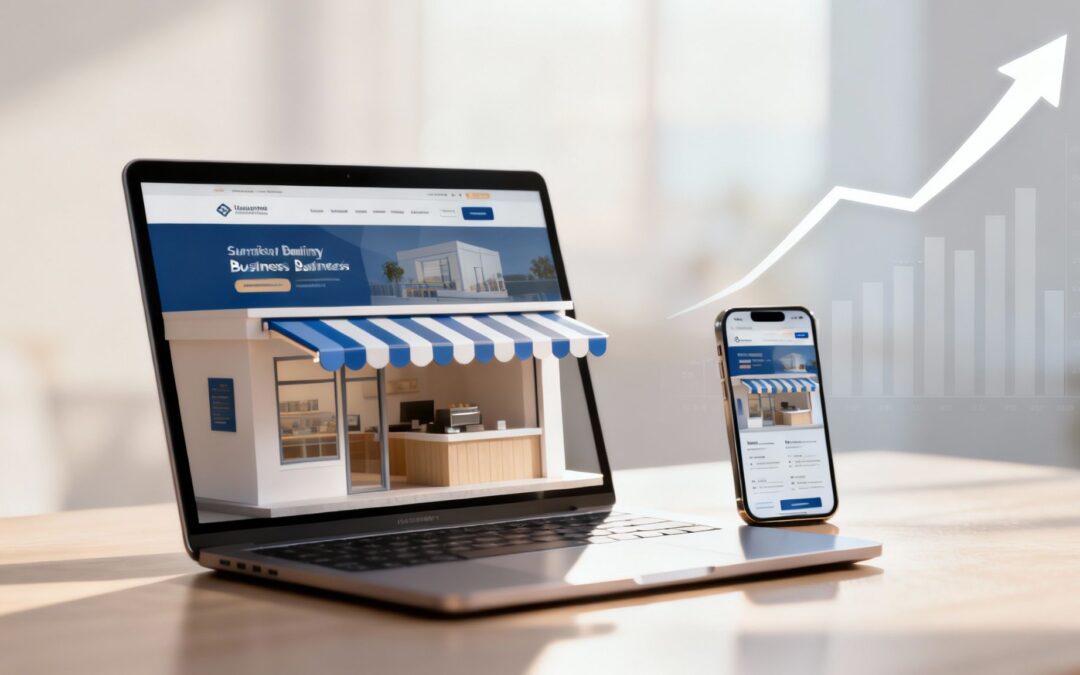
Think about your hardest-working employee. This team member works 24/7, never calls in sick, and doesn't ask for a day off. That employee is your website, and it's often the very first interaction a potential customer has with your business.
So, the real question isn't just "why is web design important?" It's "how do I set my best employee up for success?"
Your Website Is Your Digital Storefront
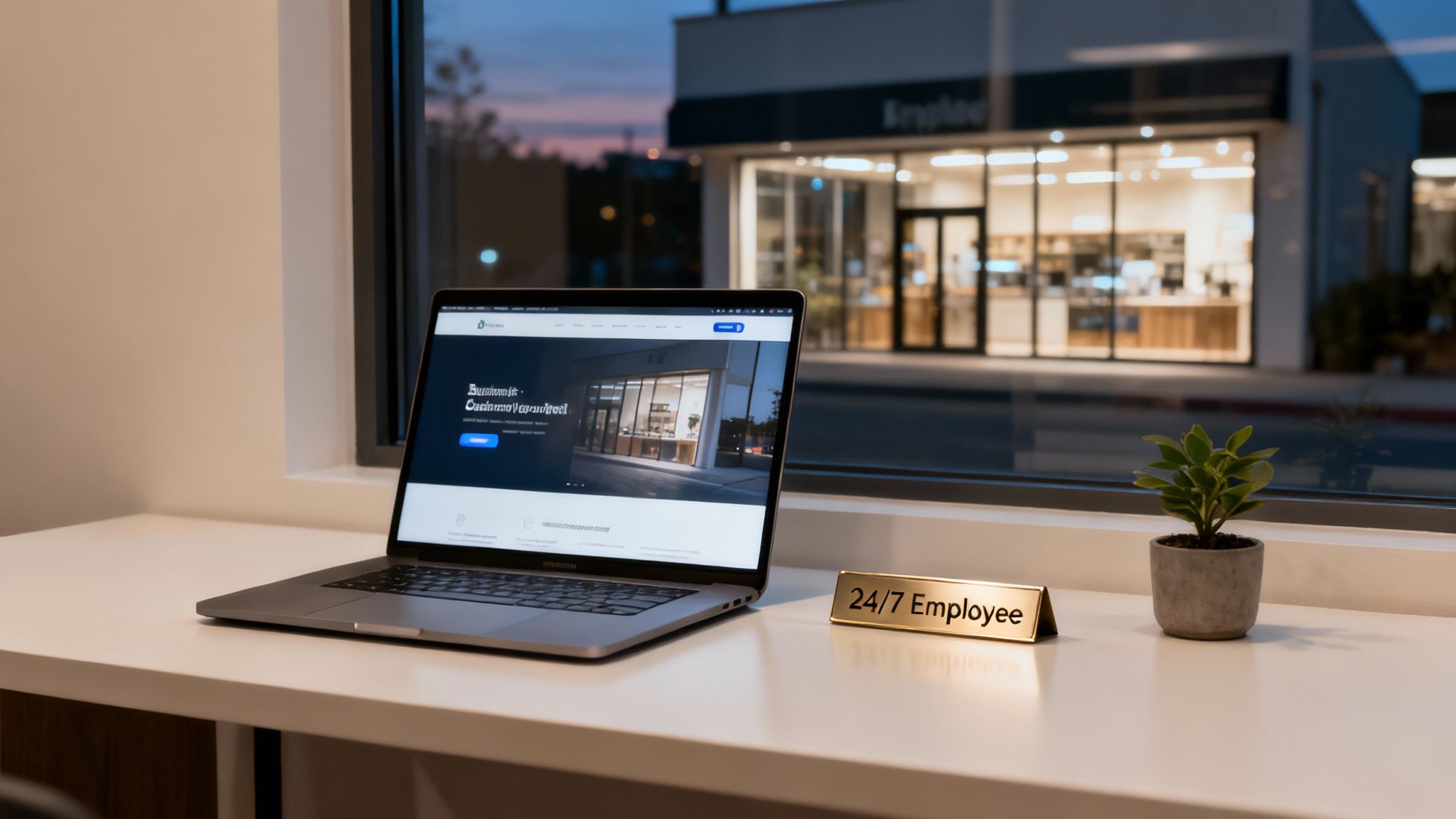
Imagine you’re walking down the street and see two shops. One has peeling paint, a cluttered window display, and a door that looks stuck. The other is clean, modern, and inviting. Which one are you more likely to enter? You’d probably head straight for the well-maintained shop, assuming what’s inside is just as high-quality.
Your website operates on the exact same principle. It’s the digital face of your business, and visitors make snap judgments the moment they arrive. A professional, clean, and easy-to-use design sends a clear message: you’re a credible, trustworthy company that cares about the details. It builds confidence before they even read a single word.
The Power of First Impressions
This isn't just a hunch; the numbers are eye-opening. A whopping 94% of first impressions are tied directly to your site’s design. This means things like your layout, color scheme, and fonts have an immediate, subconscious effect on how people perceive your brand.
It happens fast, too. Visitors form an opinion in about 50 milliseconds. That's less than a blink of an eye to either grab their attention or send them clicking away.
And it gets even more critical. Research shows that 75% of consumers admit to judging a company's credibility based on its website design alone. A poorly designed site doesn't just look bad—it actively pushes potential customers away by eroding trust.
Your website isn’t just an online brochure; it's a powerful business tool. Professional web design is the foundation for creating a positive user experience, establishing authority, and ultimately, converting visitors into loyal customers. It's not an expense—it’s a core investment in your brand's growth and success.
To put it simply, good design is good business. Here’s a quick breakdown of how design elements directly translate into tangible business benefits.
Why Web Design Is Critical for Business
| Core Design Pillar | Immediate Business Impact |
|---|---|
| Visual Appeal & Layout | Builds instant trust and brand credibility. |
| User Experience (UX) | Keeps visitors engaged and reduces bounce rates. |
| Mobile Responsiveness | Captures the 50%+ of users browsing on phones. |
| Clear Navigation | Helps customers find what they need and take action. |
| Professional Branding | Differentiates you from the competition. |
Ultimately, every aspect of your site’s design either helps or hurts your bottom line. It’s the engine that drives user perception and, in turn, their decision to do business with you.
How Great Design Builds Instant Trust
When a new visitor lands on your website, the clock starts ticking. You have just a few seconds to prove you're a legitimate, professional business they can rely on. In that first moment, they aren't reading your mission statement or your service list; they're making a snap judgment based almost entirely on what they see.
Think of your website as your digital handshake. A clean, modern, and polished design is like a firm, confident handshake. It immediately signals that you're credible and you take your business seriously. It puts people at ease.
On the flip side, a website that’s dated, cluttered, or full of broken links is a weak, limp handshake. It screams neglect and suggests that if you don't care about your own website, you probably don't care about your customers either. The numbers back this up: a staggering 75% of users admit to judging a company's credibility based purely on its web design. It’s a gut reaction that directly impacts whether they stick around or hit the back button.
The Anatomy of a Trustworthy Design
So, what exactly makes a design feel "trustworthy"? It’s not about flashy trends or over-the-top animations. It's about clarity, professionalism, and making the visitor feel secure.
When these elements come together, they work subconsciously to lower a visitor's guard, making them feel comfortable enough to explore what you have to offer.
- Consistent Branding: Your logo, color scheme, and typography should be the same on every single page. Consistency makes your business look stable and established; inconsistency just looks sloppy and unprofessional.
- Professional Imagery: High-quality, original photos of your team, your location, or your products are a huge trust signal. Relying on grainy, low-res images or generic stock photos makes your entire operation feel cheap.
- Clean and Logical Layout: A simple, uncluttered layout with plenty of white space is easy on the eyes and helps your message stand out. If users can’t find what they’re looking for easily, their frustration builds, and their confidence in you plummets.
Putting It All Together for Your Business
Let's picture a local plumbing company. If their website has mismatched fonts, blurry photos of pipes, and a contact form that doesn't work, a potential customer with a burst pipe is going to think twice. They’ll assume the business itself is just as disorganized and will immediately look for a competitor with a more professional online presence.
A well-designed website acts as your silent brand ambassador. It reassures visitors that you are a reliable, detail-oriented business, making them far more likely to take the next step—whether that's calling for a quote, filling out a form, or visiting your storefront.
Ultimately, great design removes doubt from the customer journey. It builds a bridge of trust that turns a skeptical first-time visitor into a confident new customer.
Connecting with Customers on Every Device
Just think about your own internet habits for a minute. You might scroll through emails on your phone while waiting for coffee, browse a few sites on a tablet from your couch, and then switch to a laptop to get some work done. Your customers are no different. They bounce between devices all day long.
This is exactly why responsive web design isn't just a feature anymore; it's a core requirement. A responsive website is like a chameleon, automatically adapting its layout, images, and text to look perfect on any screen, big or small.
Without it, you’re creating instant frustration. Forcing a desktop site onto a tiny phone screen is a usability trainwreck. People have to pinch, zoom, and swipe sideways just to read a sentence. That friction doesn't just annoy them. It sends them running straight to a competitor with a better, smoother experience.
Why Mobile-Friendliness Is a Business Requirement
It's no longer okay for your website to just work on a phone. It has to be designed for it. Your customers now expect a seamless, easy-to-use journey no matter how they find you.
When that experience is poor, the business impact is real and immediate:
- Lost Sales: If a potential customer can't easily find a product or complete a purchase on their phone, they're gone. That shopping cart is abandoned.
- Damaged Credibility: A clunky mobile site makes your business look outdated. It sends a clear message that you aren’t paying attention to your customers' needs.
- Higher Bounce Rates: Frustrated visitors don't stick around. They leave almost immediately, which is a major red flag for search engines.
A responsive design ensures that every visitor, whether they're on a 6-inch phone or a 27-inch monitor, gets the best possible version of your site. This consistency is absolutely critical for building a positive brand and capturing leads from every device.
Google's Mobile-First World
The importance of a mobile-friendly site goes way beyond just user convenience. It's now a huge factor in your search engine visibility. Google now uses mobile-first indexing, which means it primarily evaluates the mobile version of your website to decide where you rank in search results.
If your mobile site is slow, hard to use, or has less content than your desktop version, your ability to rank on Google will take a serious hit. The numbers don't lie: by 2025, mobile devices are expected to account for over 63% of all website visits. Plus, websites with responsive designs see their bounce rates drop by an average of 22%. You can explore more data on the impact of mobile design to see just how critical this is.
This shift means a fantastic mobile experience isn't just an option. It's a fundamental requirement for staying relevant and visible online.
Boosting Your SEO with Smart Web Design
Too many business owners think of web design and search engine optimization (SEO) as completely separate things. One is for making the site look good, the other is for getting found on Google. The truth is, they're two sides of the same coin. You simply can't have great SEO without great web design backing it up.
Think about Google's primary goal: to deliver the best possible answer to a user's query. A slow, confusing, or clunky website is a bad answer, no matter how great the content is. On the other hand, a site that’s fast, intuitive, and engaging is a fantastic answer. Your web design is what puts you in one category or the other.
How Design Directly Influences Your Rankings
The technical foundation of your website has a massive impact on how search engines can crawl, understand, and ultimately rank your pages. A clean, logical design isn't just a nice-to-have for your human visitors; it's a non-negotiable for search engine bots.
These specific design elements send powerful positive signals to Google:
- Fast Loading Speeds: Let's be honest, nobody has the patience for a slow website. If your design is weighed down by bloated code or massive, unoptimized images, people will click away in seconds. Google sees that and takes it as a sign of a poor user experience.
- Intuitive Navigation: Can a first-time visitor easily find your contact page or your list of services? When people can navigate your site without frustration, they stay longer and view more pages. This engagement is a huge green flag for search engines, telling them your site is a valuable resource.
- Clean Code and Site Structure: A well-organized site with a clear hierarchy (using header tags like H1s and H2s correctly) is like giving search engines a clean, easy-to-read map of your content. This helps them index everything efficiently, making it much easier to show your pages in relevant search results.
A technically sound and user-friendly website is the foundation of effective SEO. Google rewards sites that provide a seamless experience because that’s what users want. This means your web design choices are direct ranking factors.
Ultimately, the most important signal you can send is a positive user experience. When someone lands on your site from a search and sticks around, clicking through different pages, it tells Google that person found exactly what they were looking for. This behavior lowers your bounce rate (the percentage of visitors who leave after viewing just one page) and builds your site's authority over time. If you want to get into the nuts and bolts, you can learn more about what search engine optimization is and how it all works together.
At the end of the day, SEO isn't just a game of keywords. It's about delivering a genuinely high-quality experience, and that experience begins and ends with your web design. In today's market, getting that design right often means understanding the role of AI, and this Artificial Intelligence SEO Guide is a helpful resource for diving deeper into that.
Turning Visitors into Customers with Strategic Design
A beautiful website is one thing, but a website that actually brings in paying customers? That’s a genuine business asset. This is where strategic, or conversion-centered, design makes all the difference. It’s the craft of guiding visitors toward a valuable action, like making a purchase, filling out a contact form, or signing up for your newsletter.
Think of your website as a helpful salesperson. It should anticipate what your visitors are looking for and gently lead them in the right direction, clearing away any friction or confusion. When it’s done well, the entire experience feels intuitive and effortless for the user.
This is a critical shift in thinking. It’s how you start to see your website not just as a digital brochure, but as a powerful tool for generating real, measurable revenue.
Making the "Next Step" Obvious
Every single page on your website needs a clear job to do. It should lead visitors toward a logical next step, creating a predictable and persuasive journey. You're not just building a page; you're building a pathway.
A few key elements are non-negotiable for a design that converts:
- Clear Calls-to-Action (CTAs): Your buttons have to stand out. We’re talking contrasting colors, action-focused text (think "Get a Free Quote" instead of a generic "Submit"), and smart placement that tells users exactly what to do next.
- Streamlined Processes: Is your contact form asking for a potential customer's life story? Cut it down. Simplifying forms and checkouts is one of the fastest ways to reduce frustration and abandonment. Only ask for what you absolutely need.
- Logical User Flow: A good layout guides the eye naturally from your core message straight to the call-to-action. Key information should always be "above the fold" so people don't have to hunt for it.
Strategic design isn’t about tricking people into buying. It’s about creating an experience so clear and helpful that taking the next step feels like the most natural thing to do.
Even small adjustments can have a massive impact. Something as simple as changing a button color from a muted grey to a vibrant orange can boost clicks. Another easy win is making your phone number clickable on mobile. It removes a tiny bit of friction that can stop a customer from calling. For a closer look, these small business website design tips offer more practical advice.
At the end of the day, turning visitors into loyal customers is the name of the game. Understanding the fundamentals of Conversion Rate Optimization (CRO) is how you get there. If you want to dig deeper, there are fantastic guides on how to improve website conversion rates with proven, actionable strategies.
Measuring the ROI of Your Web Design Investment
Putting money into a professional website isn't just about aesthetics; it's a hard-nosed business decision. But how do you know if that investment is actually making you money? The answer is to stop guessing and start measuring. A great website produces real, tangible results, and the data is there to prove it.
This whole process starts with identifying your Key Performance Indicators, or KPIs. Think of these as the specific, measurable stats that show how well your website is hitting your business targets. Instead of just crossing your fingers, KPIs give you a clear scorecard for your site's performance.
Key Metrics to Track
To really get a handle on your return on investment, you have to look beyond simple traffic numbers. The right metrics tell a much more complete story about what’s working, what isn't, and why.
- Conversion Rate: This is the big one. It's the percentage of visitors who take the action you want them to, whether that's filling out a contact form, calling your shop, or buying a product. If your conversion rate is climbing, your design is doing its job.
- Bounce Rate: This number tells you how many people land on your site and leave after seeing just one page. A high bounce rate is a major red flag, often pointing to a confusing layout, slow load times, or a disconnect between your ads and your landing page.
- Session Duration: Simply put, how long are people sticking around? Longer visits are a great sign that your design is engaging and your content is hitting the mark.
- Search Engine Rankings: A well-built website is structured in a way that search engines like Google can easily understand. Keeping an eye on where you rank for your most important keywords will show you if your design is boosting your visibility or holding you back.
This flowchart maps out the journey from a solid website design to a real conversion, showing exactly how a smart strategy is the bridge between the two.
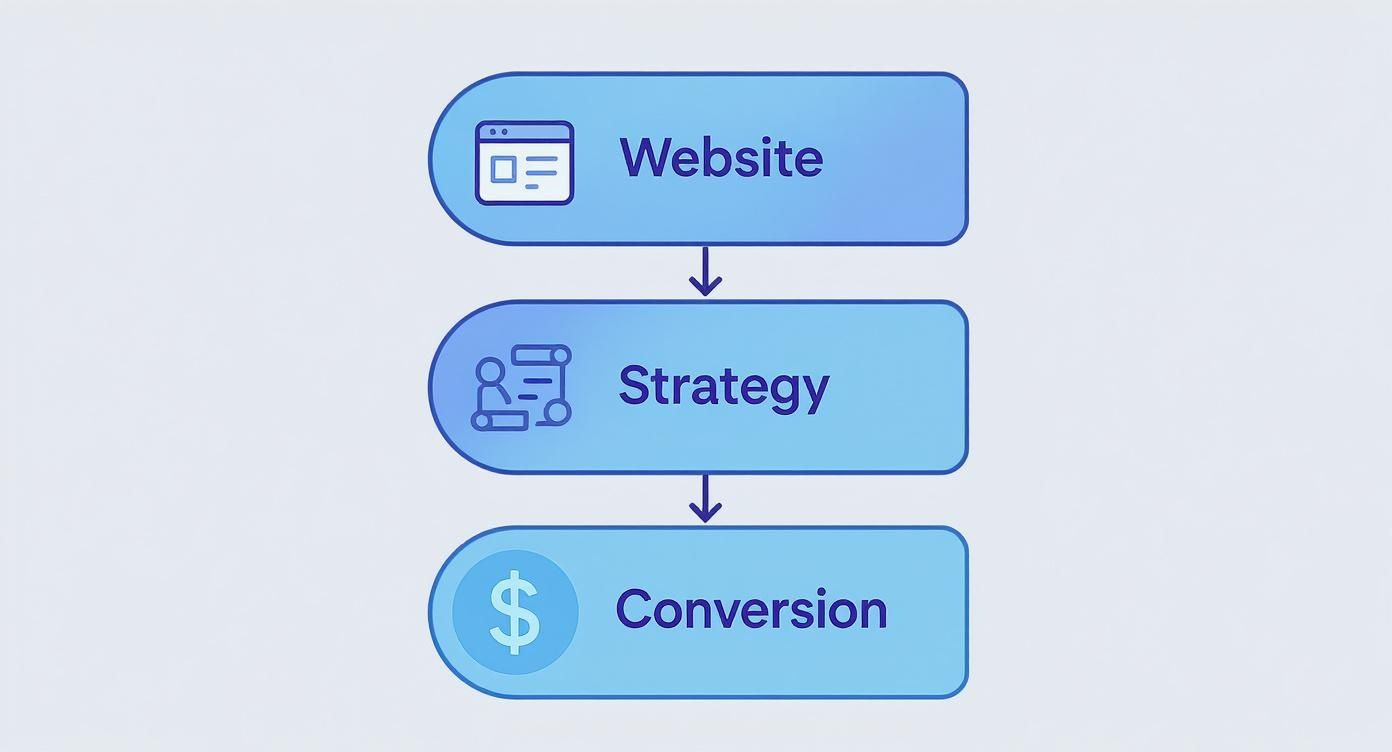
As you can see, a professional website is the foundation, but it needs a clear strategy to turn visitors into customers.
The Cost Versus Value Debate
It’s tempting to cut corners with a cheap template or a DIY website builder to save a few bucks. But this is a classic case of being penny-wise and pound-foolish. A poorly made website can end up costing you a fortune in lost sales, frustrated users, and a damaged reputation.
A professional web design isn't an expense—it's an investment in an asset that generates revenue. It’s built from the ground up to attract, engage, and convert customers, delivering a positive return that makes the initial cost well worth it.
By tracking the right KPIs, you can see the direct financial impact your website has on your business, making it crystal clear why web designing is important for any business that wants to grow.
Answering Your Web Design Questions
It's one thing to know that web design is important, but it's another to figure out the practical side of things. Let's tackle some of the most common questions we hear from business owners every day.
How Often Should I Actually Redesign My Website?
We usually recommend a major redesign or at least a significant refresh every 2-3 years. Things move fast online, from design trends to the technology running in the background.
But the real trigger isn't just the calendar. It's about performance. If your business goals have shifted, your branding has evolved, or your site just isn't bringing in leads like it used to, it's time to take a serious look. A redesign should be about improving results, not just changing colors.
Is a Cheap Website Builder Good Enough to Get By?
Look, website builders like Squarespace or Wix have their place, especially if you're just starting out with a shoestring budget. They can get you online quickly. But "good enough" often comes with hidden costs down the road.
These platforms can be surprisingly rigid. You might struggle with advanced SEO, unique features, or the ability to scale up as your business really starts to take off. A professional design isn't just a template; it's an investment in a custom-built tool designed from the ground up to meet your specific business goals and make you stand out.
Think of a web designer as the architect who creates the blueprint and visual feel of your site. The web developer is the construction crew that uses code to bring that vision to life. You need both for a successful final product.
Ultimately, a professionally built site is crafted to generate a return, not just to exist online.
Ready to invest in a website that drives real growth for your business? The team at Digital Lotus Marketing specializes in creating custom web designs that capture attention and convert visitors into customers. Learn more about our web design services.