How to Choose a Digital Marketing Agency: A Practical Guide
October 29, 20256 min readDigital Marketing
Before you even think about Googling "digital marketing agencies near me," you need to do some serious homework. The most common mistake businesses make is jumping into the search without a clear picture of what they actually need. Getting this internal alignment right from the start is the single biggest factor in finding a partner who will move the needle for you.
First Things First: Define What You Actually Need
Picking an agency isn't like hiring a freelancer; you're looking for a partner who will become an extension of your team. That means the most critical work happens long before you start sending out requests for proposals.
Your first job is to nail down your primary objective. What's the one thing you need this agency to accomplish above all else?
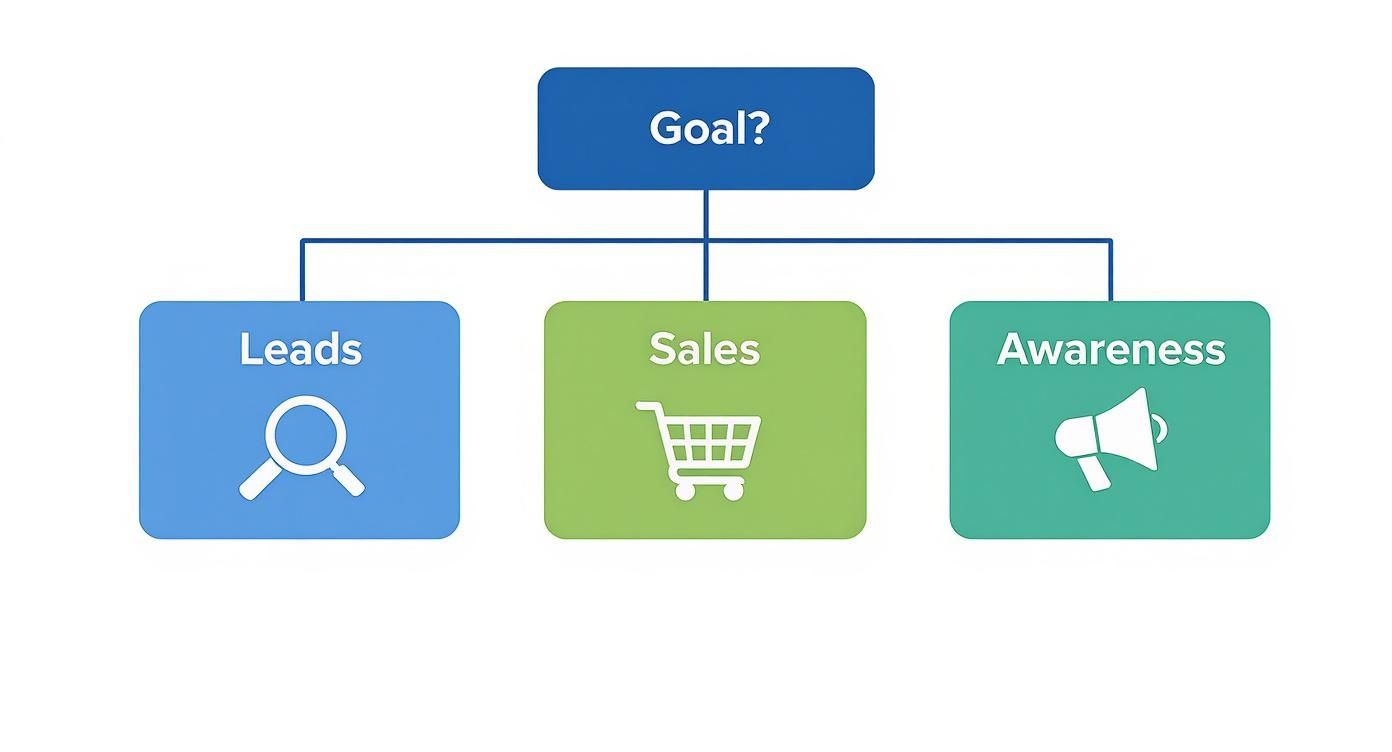
Do you need more qualified leads? This means filling the sales pipeline with prospects who are genuinely interested and ready to talk.
Is it about driving direct sales? Maybe your focus is on boosting e-commerce revenue or getting more foot traffic to your physical store.
Or is it about building brand awareness? You might need to get your name out there and establish your company as the go-to authority in your space.
Answering this question is a game-changer. It immediately filters out the noise. An agency that crushes it with e-commerce conversion funnels probably isn't the right fit for a B2B tech company that needs to generate leads through in-depth content.
This initial soul-searching helps you narrow down your choices dramatically, as this chart illustrates.
As you can see, your core business goal, whether it's leads, sales, or awareness, points you toward a specific type of agency and a certain set of marketing tactics.
Matching Your Business Need to an Agency Type
To make this even clearer, use this table to quickly align your primary marketing goal with the most suitable type of agency partner.
This isn't a perfect science, of course, but it's a fantastic starting point to ensure you're talking to the right people from the get-go.
Set a Realistic Budget and Expectations
With your goal in hand, it's time to talk money. So many businesses set a budget in a vacuum, without any real understanding of what it can achieve. A modest budget might be perfect for a hyper-targeted local SEO campaign, but it won't get you very far with a national video campaign. Be realistic.
This is also the point where you have to decide: do you need a generalist or a specialist? A generalist agency can be a good jack-of-all-trades, especially if you need support across many different channels. But a specialist brings deep, focused expertise in one area, like B2B SaaS SEO or social media for restaurants.
The market is incredibly crowded. In the U.S. alone, there are over 60,000 digital advertising agencies. With so many players, you have to look past their size and dig into their specializations. It’s telling that search engine optimization makes up the largest slice of agency revenue at 28.8%, according to industry research from IBISWorld on the digital agency market.
A successful partnership isn't just about what an agency can do; it's about what they can do for your specific goals. A specialist with a proven track record in your niche will almost always outperform a generalist trying to be everything to everyone.
Finally, none of this matters if you don't know who you're talking to. Your marketing goals are useless without a deep understanding of your customer. If you haven't done this work yet, our guide on how to create buyer personas is the perfect place to start. This ensures that every dollar you spend is aimed at reaching the people who will actually buy from you.
How to Vet an Agency’s Real-World Expertise
Alright, you’ve got your shortlist. Now the real work begins. It’s time to move beyond the slick website and the confident sales pitch to figure out if an agency can actually walk the walk. This is where you separate the contenders from the pretenders.
True expertise isn't about buzzwords or knowing the latest trends. It is forged in the trenches, proven by tangible results, and demonstrated through hands-on experience in situations like yours. Don't get blinded by a few big-name client logos; your mission is to understand their process, see how they solve problems, and confirm they've navigated the same kinds of challenges you're facing.
Look for the Story Behind the Numbers
Case studies are your first port of call, but you have to learn to read between the lines. A flashy PDF boasting a 300% traffic increase looks amazing, but it tells you absolutely nothing about how they got there.
A truly insightful case study will detail:
The Initial Problem: What specific pain point was the client experiencing that made them seek help?
The Strategy Implemented: What did the agency actually do? Was it a technical SEO overhaul, a targeted PPC campaign, a content strategy, or a combination?
The Obstacles Overcome: This is the big one. Did they deal with a sudden Google algorithm update or a hyper-aggressive competitor? How an agency handles adversity reveals far more than a simple, straightforward win.
A great case study tells a story of a partnership, a journey of problem-solving. A weak one is just a highlight reel of vanity metrics. If the details are fuzzy, consider that a warning sign.
Go Beyond Website Testimonials
Let's be honest: the testimonials on an agency’s website are curated to perfection. Of course they’re going to be glowing. To get the real story, you need to dig a little deeper.
Ask the agency if you can speak directly with one or two of their current or recent clients. A confident agency that builds strong relationships won't hesitate.
When you get them on the phone, ask pointed questions:
"How responsive is the team when you have a question or concern?"
"Can you walk me through their reporting and communication? Is it clear?"
"Did you feel like they were a genuine partner invested in your growth?"
This kind of direct feedback is gold. It gives you a glimpse into the day-to-day reality of working with them, something a polished case study will never show you.
It’s also smart to peek under the hood at their operational toolkit. The SEO reporting tools for agencies they use, for instance, can say a lot about their commitment to transparency and data-driven decision-making.
An agency that has already solved problems for a business in your specific industry brings invaluable insights. This isn't just about marketing; it's about understanding market nuances, customer behavior, and competitive pressures that a generalist simply won't grasp.