

So, you've built a website. The creative part is done, and now it's time to share it with the world. This is where many people feel a bit of technical anxiety, but I promise it's more about connecting the dots than complex coding.
Getting your website live really just comes down to a few key pieces. Think of it like setting up a new physical store: you need a unique street address, a rented storefront, and all your products ready to go on the shelves. In the digital world, it’s not much different.
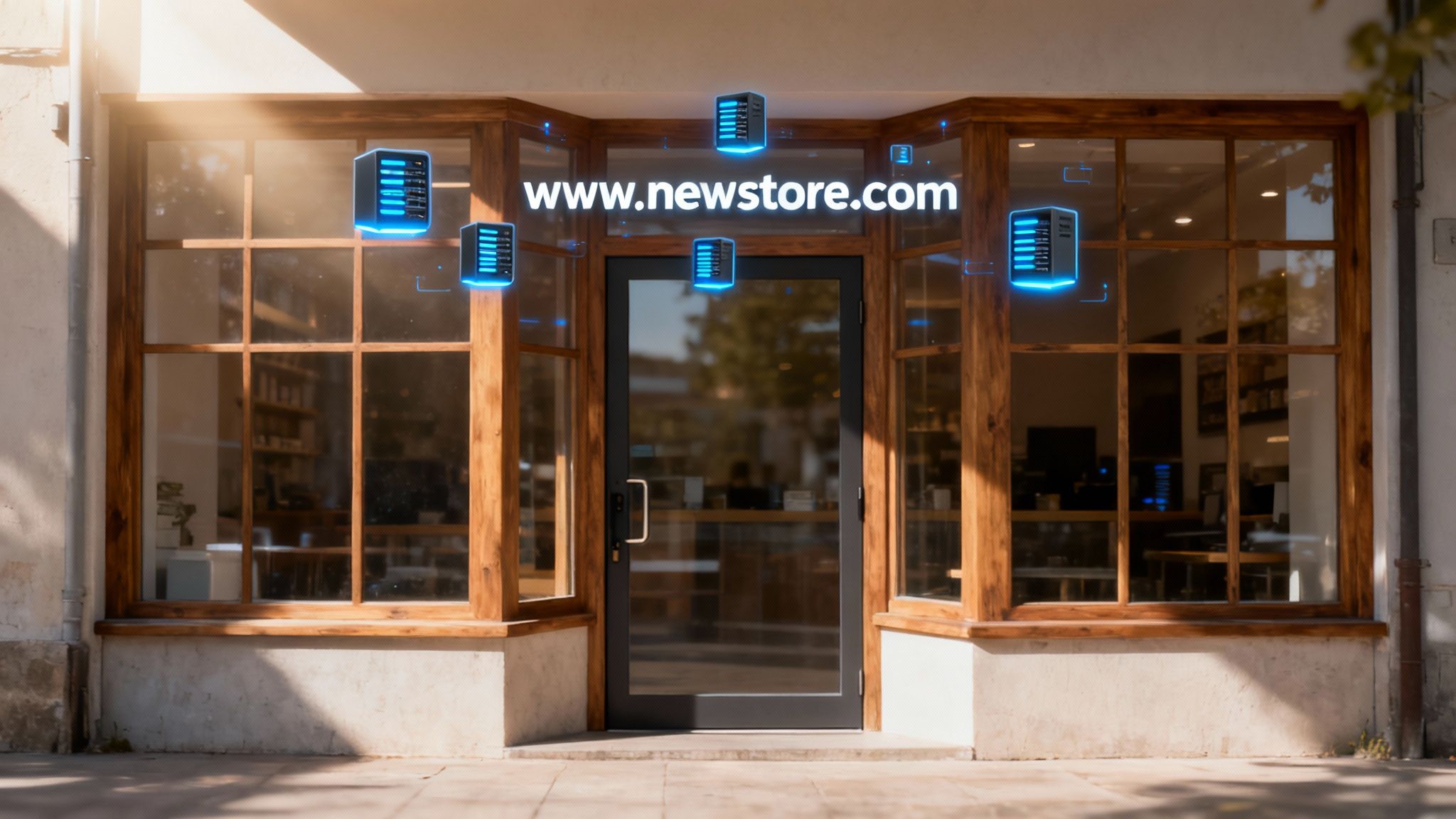
Before we jump into the "how-to," let's get our bearings. A little bit of planning here saves a lot of headaches later. Understanding what each part does helps you make smarter choices, like picking the right hosting plan from the get-go instead of realizing you need to upgrade three months down the line. A smooth launch starts with knowing the landscape.
The Three Pillars of a Live Website
Every single website you've ever visited, from Google to the smallest local blog, is built on the same three foundational elements. Getting these right is non-negotiable for a stable and accessible online presence.
Here's the quick rundown of what you absolutely need:
- A Domain Name: This is your website's unique address, like
yourcompany.com. It’s the memorable name people type into their browser to find you. - Web Hosting: This is the service that rents you space on a server to store all your website's files. It’s the engine that keeps your site running and accessible 24/7.
- Your Website Files: This is the "stuff" of your site, the code, text, images, and videos that your visitors will see and interact with.
- .com: This is the most recognized and trusted extension. If you can get it, do. It’s ideal for almost any business.
- .co: A popular alternative to .com, often snapped up by startups and modern tech companies.
- .io or .ai: These are huge in the tech scene. They instantly signal a connection to technology or artificial intelligence.
- .org: This one is traditionally the home of non-profits and community organizations.
- Transparent Pricing: Be wary of those super-low introductory prices that shoot up dramatically at renewal. A trustworthy registrar is upfront about what you'll be paying a year from now.
- Privacy Protection: Most good registrars offer WHOIS privacy. This service hides your personal contact information (like your name and address) from a public database. It's a must-have for preventing spam and protecting your privacy.
- User-Friendly Management: You'll eventually need to point your domain to your web host. A clean, intuitive dashboard makes this whole process much less of a headache.
Of course, the technical bits are only half the story. The best website in the world won't succeed if it doesn't connect with the right people. That’s why having a solid grasp of your audience is critical before you launch. If you haven't already, check out our guide on https://digitallotusmarketing.com/blog/how-to-create-buyer-personas to get that sorted. For a broader look at the entire process, this guide on how to publish a website is a fantastic resource.
Core Components for Publishing Your Website
To make this even clearer, here’s a quick-glance table breaking down the core components with a simple analogy for each.
Having a clear handle on these four elements, domain, hosting, files, and DNS, is the key to a successful launch.
It's amazing how much things have changed. Back in 2010, getting online was a real hurdle. Now, the barriers to entry have practically vanished. What was once a niche activity is now mainstream, with internet penetration soaring past 70% in many major economies by 2025. This explosion is largely thanks to user-friendly tools that let anyone build and launch a site without writing a single line of code. You can dive deeper into these trends with the global digital overview from DataReportal.
Choosing and Registering Your Domain Name
Your domain name is your digital address. It's often the very first thing a visitor sees. Think of it as your piece of real estate on the web. It needs to be memorable, easy to type, and a true reflection of your brand. Getting this right isn't just a small step; it's about securing a core part of your online identity.
A great domain name just feels right. It's simple and intuitive. For a bakery,
freshbakes.comis crystal clear and easy to remember. Something likefresh-bakes-from-the-oven-4u.com, on the other hand, is a mouthful. It’s clumsy, hard to say out loud, and a nightmare to type correctly.My advice? Stick to names that are short. Ditch the hyphens and numbers if you can. And always, always make it easy to spell.
Finding the Perfect Name and Extension
The bit after the dot, like
.comor.org, is your domain extension, and it sends its own message. While .com is still the undisputed champion for credibility, plenty of other options have become mainstream and can work just as well.
What if your first choice for a .com is already taken? Don't sweat it. You can often get creative by adding a simple, relevant word. If
evergreen.comis gone, you could try something likeevergreenlandscaping.comorgetevergreen.com. This way, your brand name stays front and center while still giving you a unique address.The key is to think long-term. Find a name that aligns with where your brand is headed. What sounds clever today might just be confusing tomorrow. Your domain should be built to last, just like your business.
Using a Domain Registrar the Smart Way
Once you've landed on the perfect name, you need to register it through a domain registrar. This is the company that officially reserves that name for you. When you start comparing registrars, don't get lured in by a flashy first-year price.
Here's what I've learned really matters:
Choosing your web address is a foundational step in learning how to publish a website. It sets the tone for your brand's entire online presence. For more detailed guidance on picking a name that works for your brand and SEO, check out these tips on how to choose a domain name effectively.
Selecting the Right Web Hosting Plan
Think of web hosting as the plot of land where you’ll build your website. Picking the right one is a big deal. It directly affects your site's speed, how secure it is, and whether it can handle a sudden rush of visitors. When you start shopping around, you'll be hit with a ton of options, but they really boil down to three main categories.
Each type of hosting strikes a different balance between cost, performance, and the amount of technical control you have. A small personal blog has completely different needs than a big e-commerce store gearing up for a Black Friday sale. Getting a handle on thes