
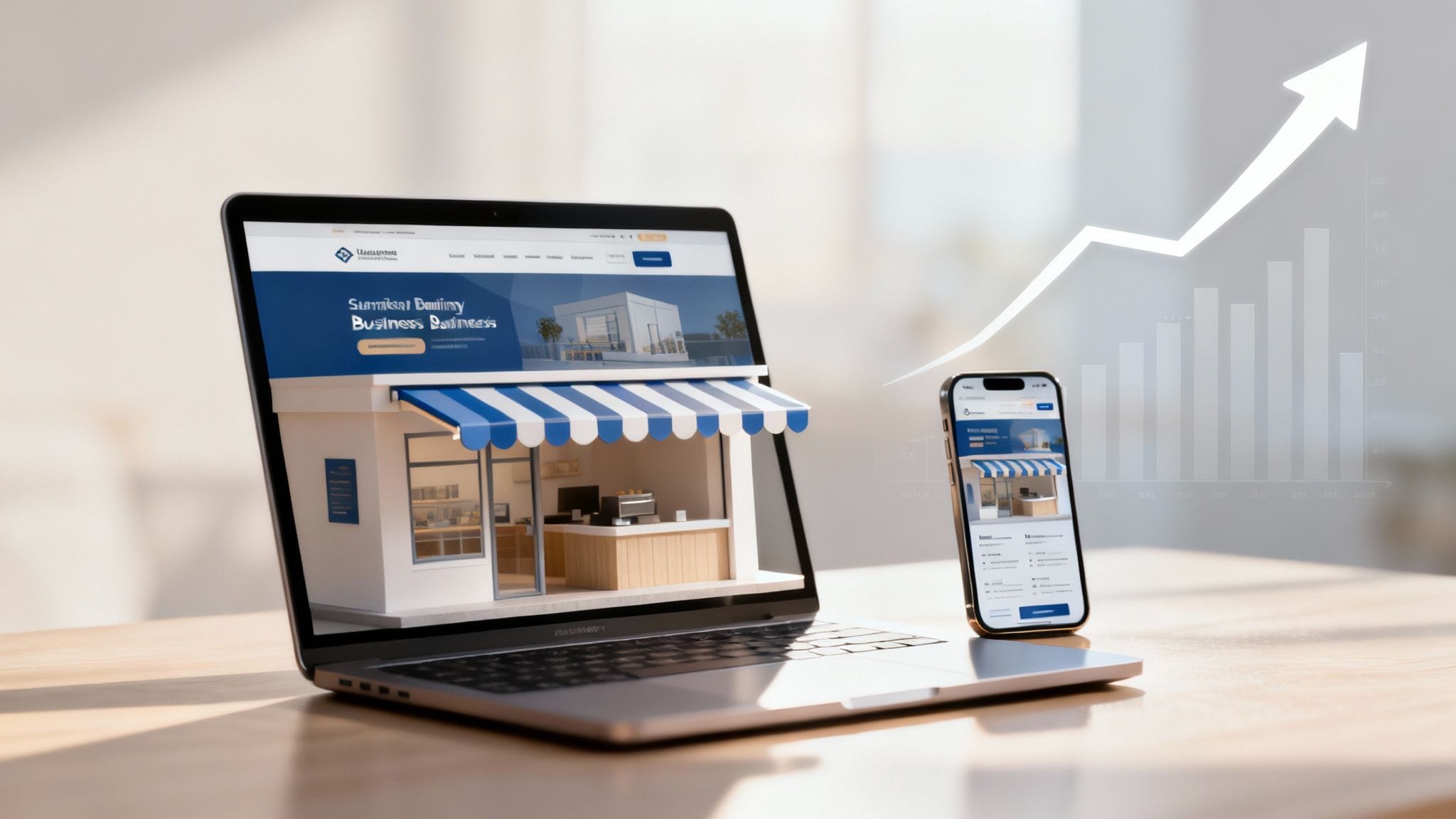
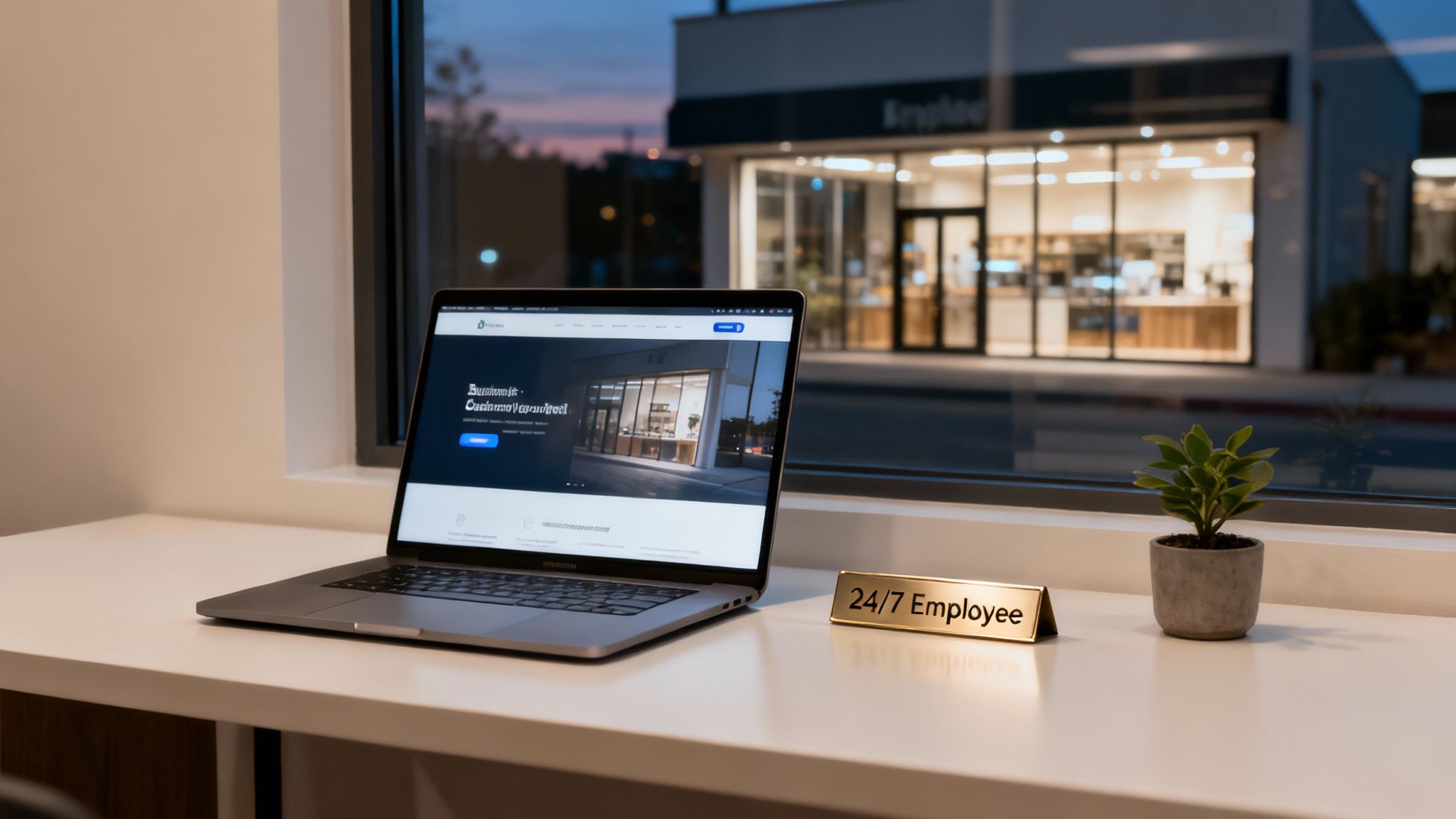
Think about your hardest-working employee. This team member works 24/7, never calls in sick, and doesn't ask for a day off. That employee is your website, and it's often the very first interaction a potential customer has with your business.
So, the real question isn't just "why is web design important?" It's "how do I set my best employee up for success?"
Your Website Is Your Digital Storefront
Imagine you’re walking down the street and see two shops. One has peeling paint, a cluttered window display, and a door that looks stuck. The other is clean, modern, and inviting. Which one are you more likely to enter? You’d probably head straight for the well-maintained shop, assuming what’s inside is just as high-quality.
Your website operates on the exact same principle. It’s the digital face of your business, and visitors make snap judgments the moment they arrive. A professional, clean, and easy-to-use design sends a clear message: you’re a credible, trustworthy company that cares about the details. It builds confidence before they even read a single word.
The Power of First Impressions
This isn't just a hunch; the numbers are eye-opening. A whopping 94% of first impressions are tied directly to your site’s design. This means things like your layout, color scheme, and fonts have an immediate, subconscious effect on how people perceive your brand.
It happens fast, too. Visitors form an opinion in about 50 milliseconds. That's less than a blink of an eye to either grab their attention or send them clicking away.
And it gets even more critical. Research shows that 75% of consumers admit to judging a company's credibility based on its website design alone. A poorly designed site doesn't just look bad—it actively pushes potential customers away by eroding trust.
Your website isn’t just an online brochure; it's a powerful business tool. Professional web design is the foundation for creating a positive user experience, establishing authority, and ultimately, converting visitors into loyal customers. It's not an expense—it’s a core investment in your brand's growth and success.
To put it simply, good design is good business. Here’s a quick breakdown of how design elements directly translate into tangible business benefits.
Why Web Design Is Critical for Business
Ultimately, every aspect of your site’s design either helps or hurts your bottom line. It’s the engine that drives user perception and, in turn, their decision to do business with you.
How Great Design Builds Instant Trust
When a new visitor lands on your website, the clock starts ticking. You have just a few seconds to prove you're a legitimate, professional business they can rely on. In that first moment, they aren't reading your mission statement or your service list; they're making a snap judgment based almost entirely on what they see.
Think of your website as your digital handshake. A clean, modern, and polished design is like a firm, confident handshake. It immediately signals that you're credible and you take your business seriously. It puts people at ease.
On the flip side, a website that’s dated, cluttered, or full of broken links is a weak, limp handshake. It screams neglect and suggests that if you don't care about your own website, you probably don't care about your customers either. The numbers back this up: a staggering 75% of users admit to judging a company's credibility based purely on its web design. It’s a gut reaction that directly impacts whether they stick around or hit the back button.
The Anatomy of a Trustworthy Design
So, what exactly makes a design feel "trustworthy"? It’s not about flashy trends or over-the-top animations. It's about clarity, professionalism, and making the visitor feel secure.
When these elements come together, they work subconsciously to lower a visitor's guard, making them feel comfortable enough to explore what you have to offer.
Consistent Branding: Your logo, color scheme, and typography should be the same on every single page. Consistency makes your business look stable and established; inconsistency just looks sloppy and unprofessional.
Professional Imagery: High-quality, original photos of your team, your location, or your products are a huge trust signal. Relying on grainy, low-res images or generic stock photos makes your entire operation feel cheap.
Clean and Logical Layout: A simple, uncluttered layout with plenty of white space is easy on the eyes and helps your message stand out. If users can’t find what they’re looking for easily, their frustration builds, and their confidence in you plummets.
Putting It All Together for Your Business
Let's picture a local plumbing company. If their website has mismatched fonts, blurry photos of pipes, and a contact form that doesn't work, a potential customer with a burst pipe is going to think twice. They’ll assume the business itself is just as disorganized and will immediately look for a competitor with a more professional online presence.
A well-designed website acts as your silent brand ambassador. It reassures visitors that you are a reliable, detail-oriented business, making them far more likely to take the next step—whether that's calling for a quote, filling out a form, or visiting your storefront.
Ultimately, great design removes doubt from the customer journey. It builds a bridge of trust that turns a skeptical first-time visitor into a confident new customer.
Connecting with Customers on Every Device
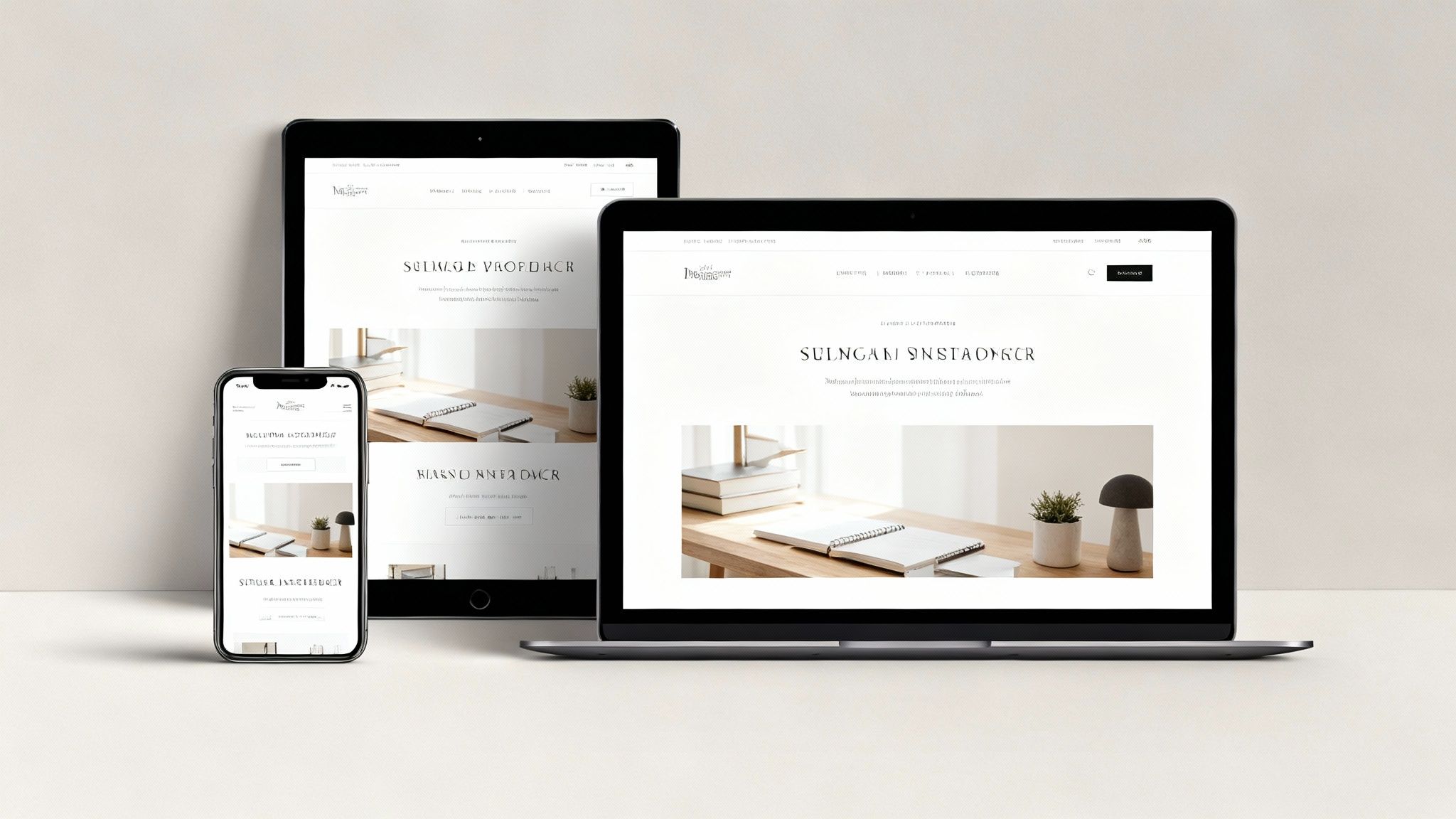
Just think about your own internet habits for a minute. You might scroll through emails on your phone while waiting for coffee, browse a few sites on a tablet from your couch, and then switch to a laptop to get some work done. Your customers are no different. They bounce between devices all day long.
This is exactly why responsive web design isn't just a feature anymore; it's a core requirement. A responsive website is like a chameleon, automatically adapting its layout, images, and text to look perfect on any screen, big or small.
Without it, you’re creating instant frustration. Forcing a desktop site onto a tiny phone screen is a usability trainwreck. People have to pinch, zoom, and swipe sideways just to read a sentence. That friction doesn't just annoy them. It sends them running straight to a competitor with a better, smoother experience.
Why Mobile-Friendliness Is a Business Requirement
It's no longer okay for your website to just work on a phone. It has to be designed for it. Your customers n