Digital Marketing Strategies for Startups: How to Grow Fast
November 4, 20255 min readDigital Marketing
Trying to start a business without a solid plan is like setting sail without a map or a compass. You might be moving, but you have no idea if you're heading in the right direction. When it comes to digital marketing for startups, you don't need a 50-page document full of theories. What you need is a simple, actionable framework that guides every single decision, ensuring every dollar and every minute you spend is a deliberate step forward.
Build Your Foundation with a Lean Marketing Plan
I’ve seen it time and time again: one of the biggest mistakes new businesses make is jumping straight into tactics. It’s so tempting to start running ads or blasting social media posts right away. But without a solid foundation, those efforts almost always end in wasted money and frustration.
A lean marketing plan is your strategic compass. It forces you to get crystal clear on the fundamentals before you spend a dime, moving you from guessing what might work to knowing what should work. It's about being purposeful.
Define Your Customer and Your Goals
Before you can sell a thing, you have to know exactly who you're selling to. This isn't a "nice-to-have"; it's a must. When you can paint a picture of your ideal customer—their biggest headaches, where they hang out online, what makes them tick—your marketing message suddenly becomes a thousand times more effective. If you're new to this, a great place to start is learning how to create buyer personas that will shape all your content and targeting.
The other half of the equation is setting goals that actually mean something. "Get more sales" is a wish, not a goal. We need to get specific with SMART goals: Specific, Measurable, Achievable, Relevant, and Time-bound.
Specific: "Increase qualified leads from our website by 20% in Q3."
Measurable: "Achieve a 5% conversion rate on our new product landing page."
Relevant: "Grow our email list to 500 subscribers to support our direct sales efforts."
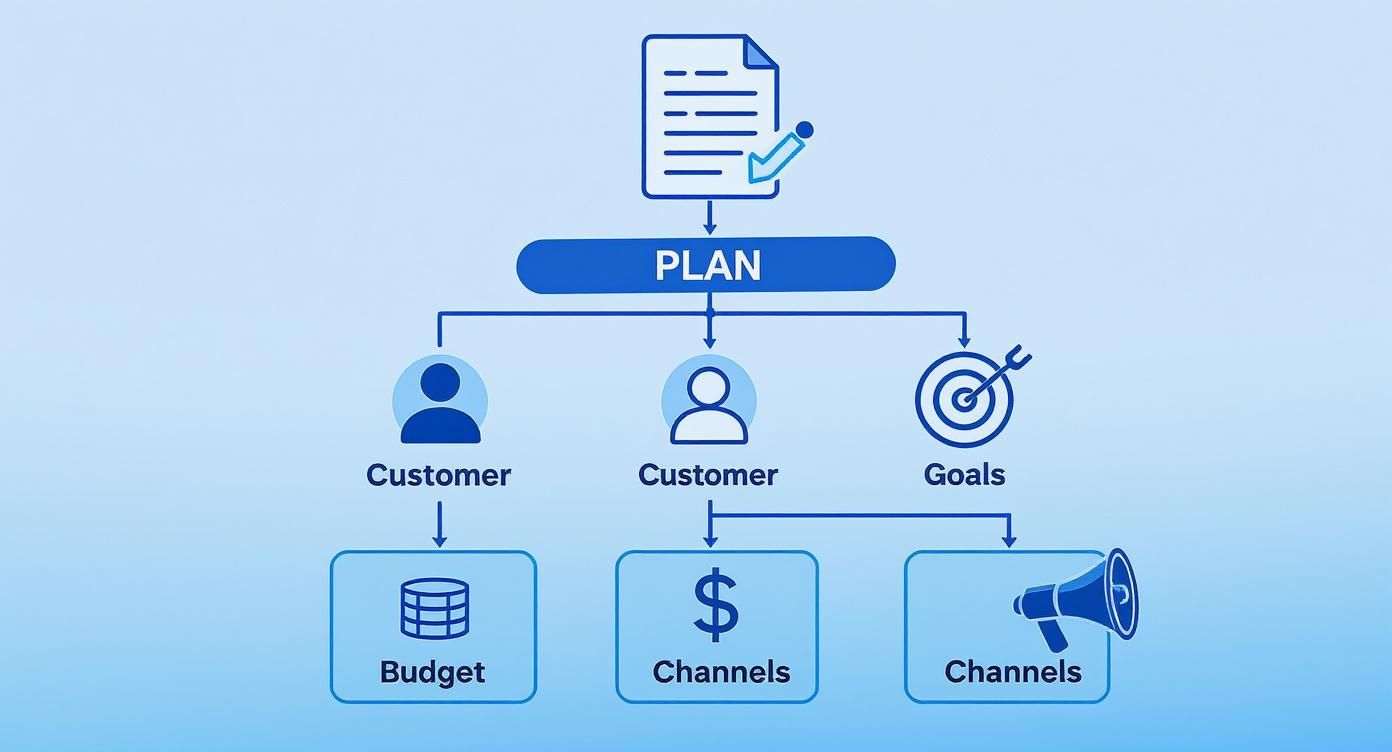
This diagram really nails the core components you need for a solid marketing foundation.
As you can see, it all flows from that initial plan. Your plan informs your understanding of customers and goals, which then dictates where you put your money and which channels you use.
A well-defined plan is the difference between marketing that feels like a series of random activities and marketing that functions as a predictable engine for growth.
To help you get started on the right foot, I've put together a quick checklist of the foundational marketing activities every new startup should tackle.
Startup Digital Marketing Quickstart Checklist
This checklist isn't about doing everything at once. It's about focusing on the high-impact actions that lay the groundwork for everything else.
With your ideal customer in mind and clear goals defined, you’re finally ready to think about your budget and pick the marketing channels that will give you the biggest bang for your buck. This foundational work stops you from spreading your limited resources too thin and helps you zero in on what will actually move the needle in these critical early days.
Dominate Search with Smart SEO for Startups
For any new business, showing up on Google isn’t just a nice-to-have; it's a lifeline. Think about it: when someone needs a solution to a problem, their first instinct is to search online. Search Engine Optimization (SEO) is how you make sure your startup is the answer they find. It’s all about earning free, highly relevant traffic that grows over time.
Imagine SEO as building a digital storefront on the busiest street in the world. Instead of paying sky-high rent for a prime spot (the way you do with ads), you earn your position by being the most helpful, trustworthy, and relevant shop for what people are looking for. This is what makes SEO so powerful for startups—it builds a real, sustainable asset for your business.
While the term "SEO" might sound intimidating, the core idea is straightforward. You figure out what your customers are searching for, create the best content to answer their questions, and make sure your website is easy for search engines to crawl and understand. If you're new to this, our complete guide explaining what is search engine optimization is a great place to start.
The Quick Win: Your Google Business Profile
For most startups, especially those serving a local area, your Google Business Profile (GBP) is the single most valuable SEO tool you have. It’s that handy info box that pops up in Google Maps and local search results, showing your address, hours, photos, and reviews. Ignoring it is like owning a shop but forgetting to put a sign on the door.
Getting your GBP in top shape is a non-negotiable first step. This is your chance to grab the attention of potential customers right in your neighborhood—people who are often ready to make a purchase.
Here’s what you need to do right away:
Complete Every Single Section: Don’t cut corners. Fill out every field available, from services and products to accessibility attributes. The more details you give Google, the better it understands what you do.
Upload High-Quality Photos: This is huge. A profile packed with real photos of your space, your team, and your products builds instant trust.
Actively Chase Reviews: Customer reviews are a massive ranking signal. Encourage your happy customers to leave feedback, and make sure you respond professionally to every review, good or bad.
Use Google Posts: Think of this as a mini-blog for your business. Share regular updates, special offers, and news to show Google (and customers) that you're active and engaged.
Your Google Business Profile is your digital welcome mat. A fully optimized profile with great photos and glowing reviews can immediately increase calls, website clicks, and foot traffic.
Building Long-Term Authority
While your GBP provides a fantastic initial boost, true search dominance requires a long-term vision. It's all about methodically proving to search engines that you are a credible authority in your niche. This is where creating genuinely helpful content comes into play.
By publishing blog posts, guides, and articles that solve your customers' biggest problems, you start attracting organic traffic and earning valuable backlinks from other websites. You can dive deeper into these tactics with comprehensive guides on SEO strategies specifically designed for small businesses.
Investing in SEO isn't just a trend; it's a fundamental business strategy. Today, 92% of marketers plan to maintain or increase their SEO investment because they know it works. In fact, a sta