How to Increase Website Traffic: Practical Strategies
October 11, 20255 min readDigital Marketing
If you want to get more people to your website, you need to think bigger than just one tactic. It’s not about a single magic bullet. Instead, it’s a combination of solid on-page SEO, genuinely helpful content, and smart promotion. This is about building a system that attracts the right kind of visitors over and over again.
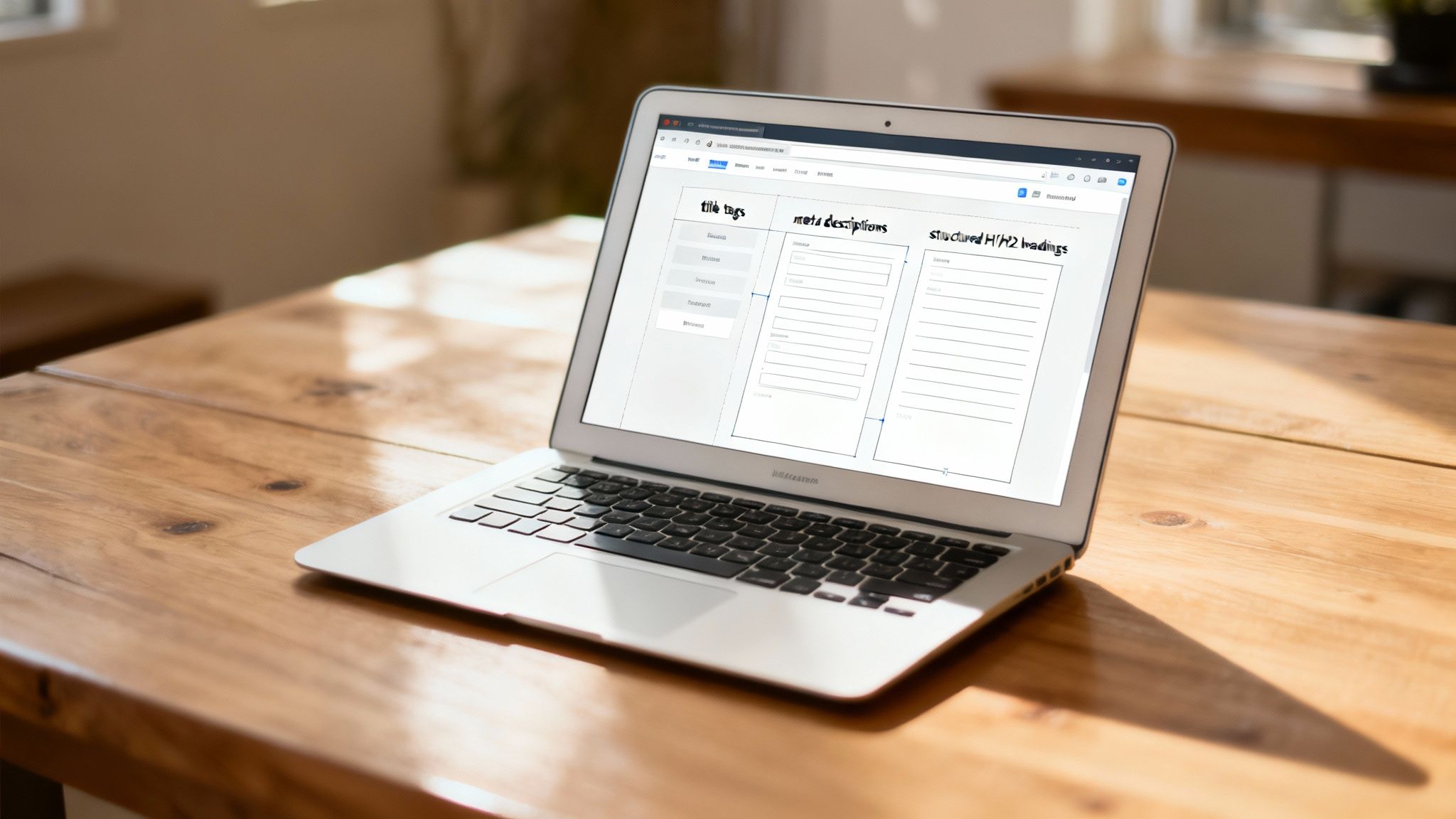
Build Your Traffic Foundation with On-Page SEO
Before you even think about viral content or big traffic numbers, you have to get your house in order. On-page SEO is that foundation. Without it, anything else you build is going to be shaky. This is your chance to tell search engines exactly what your site is about and why it’s worth a look.
A lot of people get intimidated by SEO, thinking it’s some mysterious art. It’s really just about making your website clear and easy to understand for both real people and search engine bots. If you're new to the concept, our guide explaining what is search engine optimization? is a great place to start.
Master Keyword Research That Works
First things first: stop chasing those massive, high-competition keywords. Trying to rank for something like "small business marketing" is a surefire way to get lost in the crowd. The real wins come from understanding what your specific customers are actually typing into the search bar.
Think about it. A local bakery isn't going to get very far targeting "birthday cakes." But what if they focused on "custom gluten-free birthday cakes in Austin" or "order vegan cupcakes online same day"? These are long-tail keywords. They’re longer, more specific, and reveal exactly what the searcher wants. The search volume is lower, sure, but the traffic you get is far more likely to convert into actual business.
Craft Titles and Descriptions That Earn Clicks
Your title tag and meta description are your first impression in the search results. You can be the #1 result, but if your title is bland, people will scroll right past you. Your job is to be both accurate and enticing.
Weak Title: "Our Services"
Strong Title: "Expert SEO Services for Plumbers | Get More Local Leads"
See the difference? The second one immediately tells a plumber what the service is, who it's for, and what they'll get out of it. It connects with a specific need.
Your meta description is where you can elaborate on that promise. Don’t just list features; sell the outcome.
My Go-To Tip: Always put your main keyword in your title tag, ideally toward the beginning. Use the meta description to answer the user’s unspoken question and give them a compelling reason to click through to your page.
Structure Your Content for Readability
Nobody likes hitting a wall of text. Using headings (H1, H2, H3) to structure your content is non-negotiable for both your visitors and for search engines. It breaks everything down into digestible, scannable chunks.
A page should only ever have one H1 tag, which is your main headline. From there, use H2s for the big sections and H3s for the sub-points. This creates a logical outline that helps Google quickly grasp the key topics on your page. This isn't just about looks; it makes your content more user-friendly, which can keep people on your site longer, a big thumbs-up in Google's eyes.
Use Internal Links to Build Authority
I can't stress this enough: internal linking is one of the most powerful and overlooked SEO tactics out there. It’s simply the act of linking from one page on your website to another relevant page. This simple step accomplishes three key things:
It guides your visitors: Helps them find more of your awesome content, keeping them engaged.
It spreads link authority: Passes ranking power from strong pages (like your homepage) to other important pages.
It establishes context: Shows search engines how your pages are related, which builds your site’s authority on a topic.
For example, if you write a blog post on "social media marketing tips," it's a no-brainer to link to your "social media management" service page. As you put these pieces together, you start to see the bigger picture of how to build an online presence that drives growth. Nailing these on-page fundamentals is the crucial first step to getting more traffic that sticks around.
Create Content That Naturally Attracts Visitors
If on-page SEO is the foundation of your website, think of content as everything inside: the furniture, the art, the reasons people want to come inside and stay for a while. It’s the engine that powers your entire traffic strategy.
Great content transforms your website from a simple online brochure into a destination people actively seek out. This isn't about just churning out blog posts to meet a quota. It's about creating genuinely helpful, engaging, and authoritative pieces that solve real problems for your audience. When you get that right, you’re not just chasing rankings; you’re building a community that trusts you and keeps coming back for more.
Identify and Solve Real User Problems
The best content almost always starts with a simple question: "What does my audience actually need help with?" You have to stop guessing and start listening. Pinpoint the specific pain points, burning questions, and daily challenges your ideal customers are facing.
Think about a local accounting firm that works with freelancers. They don't just sell "bookkeeping services." Their audience is up at night worrying about things like "how do I track my business expenses properly?" or "what on earth are quarterly taxes and do I owe them?" By creating detailed guides answering these exact questions, the firm establishes itself as a trusted expert long before anyone even thinks about a sales pitch.
Choose the Right Format for Your Message
Once you know the problem you’re solving, you need to decide on the best way to present the solution. A blog post isn't always the answer. The format you choose should fit what the user is trying to accomplish.
Deep-Dive Guides: These are perfect for complex topics that need thorough, step-by-step explanations. Think of something like "The Ultimate Guide to Starting an Etsy Shop."
Case Studies: Fantastic for showing, not just telling. A case study titled "How We Helped a Local Restaurant Increase Bookings by 40%" provides undeniable social proof.
Checklists and Templates: People love these because they're actionable and highly shareable. A "New Website Launch Checklist" is something your audience will bookmark and use repeatedly.
Infographics: Ideal for breaking down data or complicated processes into something visually appealing and easy to digest. Plus, they get shared like crazy on socia